Recent articles

  • Project Guides

    Starters and ideas Projects for all ages which can be made using tools and equipment found within the Community Studio
  • Community Studio Grand Opening October 3rd 2026

    [Photos by Tim Hardy Photography
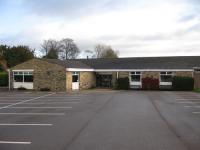
  • Hampsthwaite Community Studio

    Hampsthwaite Community Studio provides a friendly, welcoming and safe environment in which members of the local community can meet, share skills, learn from one another and take part in practical, creative and social activities.The Studio aims to: reduce social isolation and encourage friendship and companionship; promote well-being through purposeful practical activity; provide opportunities to learn, practice and share skills; encourage repair, reuse and responsible use of materials; enable members to undertake individual and community projects; provide opportunities to use both traditional craft skills and modern technologies; encourage people of different backgrounds, ages and abilities to participate.
  • Kids Can Do It

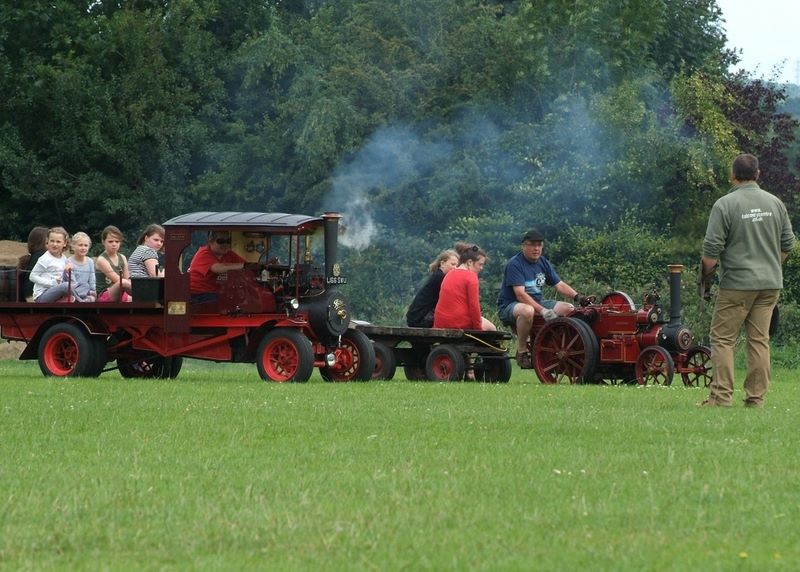
    Kids Can Do It a crafting in cardboard and stripwood practical activity days. 'standard' materials provided or bring your own. pre-printed designs and patterns available to prepare at home first. adults and teens welcome if accompanied by Under Year 7's they're helping cafe open for teas, coffee and biscuits
  • Child's Chair by Peter Barker

    From a website comment by Mr Derek Barker:""My father Jim Walker formerly a gas meter reader was born in a cottage adjacent to the church gates. Unfortunately I do not know which one of the pair he was born in. As a child he used the chair shown in the photographs. My father who passed away in 2004 told me that it was made from oak taken from Hampsthwaite Church. I make no claims as to its provenance but there is just a chance that it was made by Peter. The Teddy which gives scale to the chair is over 100 years old and belonged to my father in law Arthur Myers of Stubhouse Farm (Emmerdale site) in Harewood Park."
  • 22 Platoon from Army Foundation College

    THIS COMING WEEKEND 21st and 22nd JUNE!I am delighted to announce that 38 young soldiers from22 Platoon at the Army Foundation College will be hosted here todo 'good works' around the village towards their Duke of Edinburgh Award.Please welcome them, thank them, and if you wish, join them!They will be working 1030hrs - 1530hrs around Feast Field on Saturday,followed by Memorial Hall then Village Centreand ending at the churchyard on Sunday.Our Community PayBack Team have kindly loaned several gardening tools,we have sourced others, but if you are able to loan any, especially clippers,trimmers, shears, forks or half moons etc. that would be very helpful.Please label them bring along to leave in the Memorial Hall Foyer 
  • Hampsthwaite Housing

    Local planning authorities need to regularly identify and update their supply of sites for housing development as part of their adopted local plan. North Yorkshire Council is currently drawing up a new county wide local plan and a new consultation (Issues and Options) is about to begin.
  • VE-Day80 8 - 10 May 2025

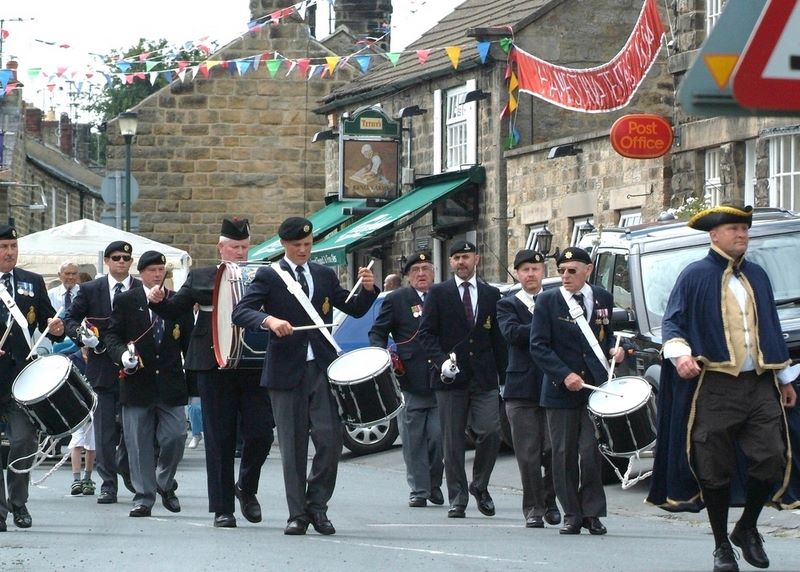
    Our Memorial Hall was built to honour the fallen in two world wars and give thanks to those who returned. It is appropriate therefore that we play our full part in the national celebrations and village activities are planned for May 8th VE-Day and Saturday May 10th 2025
  • Blind Peter Barker

    Remembering Hampsthwaite’s Blind Joiner - an article by Shaun WilsonLike the market town of Knaresborough, who had ‘Blind Jack’ – John Metcalf, the road builder of Yorkshire in the eighteenth century, the small rural village of Hampsthwaite had it’s blind hero also, almost a century later – Peter Barker who became known as ‘The Blind Joiner of Hampsthwaite.’ Though there are some similarities between John Metcalf and Peter Barker’s lives, these are purely co-incidental and each fulfilled a life, character and career in their own right.
  • The Execution of Hannah Whitley

    Arsenic Poisoning in Hampsthwaite - The Execution of Hannah Whitley In 1789, Hannah Whitley of Hampsthwaite used a pie as the delivery medium for a fatal dose of arsenic, with the poison concentrated in the crust. She claimed She had been coerced into the act of poisoning by her employer, a local linen weaver named Horseman, who was involved in an on-going feud with the intended victim.
RSS Feed of this page

Search articles

search in
articles published on or after
articles published on or before
172 matching items found
Result pages: 1 2 3 4 5 6 7 8 9 10 11 12 13 14 15 16 17 18 [Next >>]

In Memoriam - H Parker


William Henry ('Harry') Parker


Harry Parker


William Henry (known as 'Harry') was born at Clint on the 17th December 1887, the son of William Parker (a farmer and postman) and Ann Parker.

At the age of 16 Henry emigrated to Canada to work as a farm labourer. On the 7th September 1916 he enlisted with the Canadian Expeditionary Force and, after initial training, was sent in about March 1917 to join 75th Battalion 11th Brigade of the 4th Canadian Division at Vimy Ridge in France. It was in the final battle for the Ridge that he was wounded on Easter Monday 9th April 1917.

He died from his wounds on the 20th April and is buried at Boulogne Eastern Cemetery (Plot4, Row C, Grave 13).

Click here to read a fuller account of his life and service

 No medal record has yet been seen but he would have qualified for the British War and Victory medals. His next of kin would have qualified for the Canadian Memorial Cross.


British War MedalVictory MedalCanadian Memorial Cross
British War
Medal
Victory
Medal
Memorial
Cross

WW2 PoppiesWW1 Poppies

History of Hampsthwaite

The earliest written record of the settlement (circa 1180) is as “Hamethwayt” in the Early Yorkshire Charters.

The name 'Thwaite' comes from the Old Scandinavian word 'thveit', meaning 'clearing, meadow or paddock' and Hampsthwaite could mean the thwaite, or meadow, of Hamr or Hammall, or simply from Heim, meaning home, but it is almost certainly derived from the Old Norse Homp, 'land bordering on a river and liable to flooding' (an alternative possibility was put forward that the name 'Hamps' may derive from the Middle English, 'Hanespe', which means 'summer dry', or dry in summer but this would be an unlikely combination of Old Norse and Anglo Saxon).

Records show that flooding was indeed a feature of the River Nidd, which runs through here, although the Roman road from 'Olicana' (Ilkley) to 'Isurium' (Aldborough) crossed the Nidd at Hamps-thwaite and this led to the development of a market.

Hampsthwaite was situated within the Forest of Knaresborough, which was established as a royal hunting preserve in the time of the Conqueror. The church of Hampsthwaite was in existence soon after the Norman Conquest and was at one time in the possession of the monks of Knaresborough.

The family of the writer William Makepeace Thackeray lived in Hampsthwaite, as did the family of Amy Woodforde Finden (1860-1919) who was best known as the composer of “Kashmiri Song” from The Four Indian Love Lyrics by Laurence Hope. In the churchyard are the graves of Joshua Tetley, the founder of the Tetley's Brewery in Leeds, and his wife Hannah; Jane Ridsdale, who died age 58 but only 31 ½ inches tall; and Peter Barker, the blind joiner of Hampsthwaite.


Click here to subscribe to Hampsthwaite Village History and receive an email each time new materials are posted

The Nelson Inn

The Nelson Inn 2019
The Nelson Inn 2019
(click photos to enlarge)
Read more...

Levens Hall

A Grade II Listed Building No.1150420 on Lund Lane, Killinghall, HG3 2BG

The house is said to have been the home of Captain John Levens who settled there after the Civil War. He became a Quaker and died in 1688, being buried in the orchard or stackyard; 2 of his children were also buried there.
[H Speight, Upper Nidderdale, 1906, p 135]
Levens Hall (front right)
Read more...

Abattoir

Link to 383

As a centre of agriculture, Hampsthwaite has had many slaughterhouses in or near the village area. According to plans drawn by the late Bernard Wilson (see Book One -"Villagers' Reminiscences") one was situated off Hollins Lane; another opposite the present Peckfield estate; another amongst farm buildings south of the Village Room; behind the site of the Joiners Arms; on farmland abutting the north bank of the river and east of the river bridge; on a site near South Royd and yet another to the east of the barns from which South Royd and adjacent houses were recently formed. The approximate positions of those slaughterhouses can be seen by clicking here to see illustrations produced for a village history exhibition by Bernard Wilson on which they are marked as 'SLT HOUSE'. It is the last of those slaughterhouses (marked 3RD SLT HOUSE) which we see in the aerial photograph above and that one which assumed the greatest importance. It stood on part of the farmland owned by the Addyman family (click here to read an account of ownership of land on the east side of Church Lane).

Read more...

Ownership of properties on the East side of Church Lane

Despite the existence of records at the West Riding Deeds Registry, it is difficult to trace the ownership of properties back beyond the 20th century. The use of plans was not common in earlier days and title deeds often describe properties by reference to their then occupants and the owners or occupants of adjacent plots. People living in the vicinity at the time such property was described in a deed may well have understood what was being described but later generations do not often have the necessary local knowledge to interpret the deeds.

Read more...

Corner Cottage

Link to 362

(click photo to enlarge)

Read more...

Battle of Monte Scalari

The 4th British Infantry Division . . . fighting its way through Tuscany towards Florence, had reached the foothills of the Chianti Mountains where German Panzer Grenadiers were entrenched by late July 1944.

Read more...

Ashley House

Link to 471

(click photo to enlarge)

Read more...
Result pages: 1 2 3 4 5 6 7 8 9 10 11 12 13 14 15 16 17 18 [Next >>]